




Chicago’s underground infrastructure works hard. It carries the load of one of the country’s busiest freight and transit corridors, absorbs some of the most punishing freeze-thaw cycles in any major U.S. metro, and sits in a soil environment that moves, compresses, and shifts throughout the year.
For contractors and engineers working on trenchless pipe rehabilitation across Cook County, the collar counties, and the city itself, CIPP liner thickness is not a preference. It is a structural decision with consequences that play out over decades below grade.
What Chicago’s Underground Actually Looks Like
Chicago blue clay is not a friendly installation environment. It is a dense, expansive material that compresses under load, moves with moisture changes, and places sustained lateral and vertical pressure on buried pipe systems. Pipes installed in Chicago’s older residential neighborhoods, many of them clay tile or concrete laid during the first half of the last century, have been absorbing that pressure ever since.
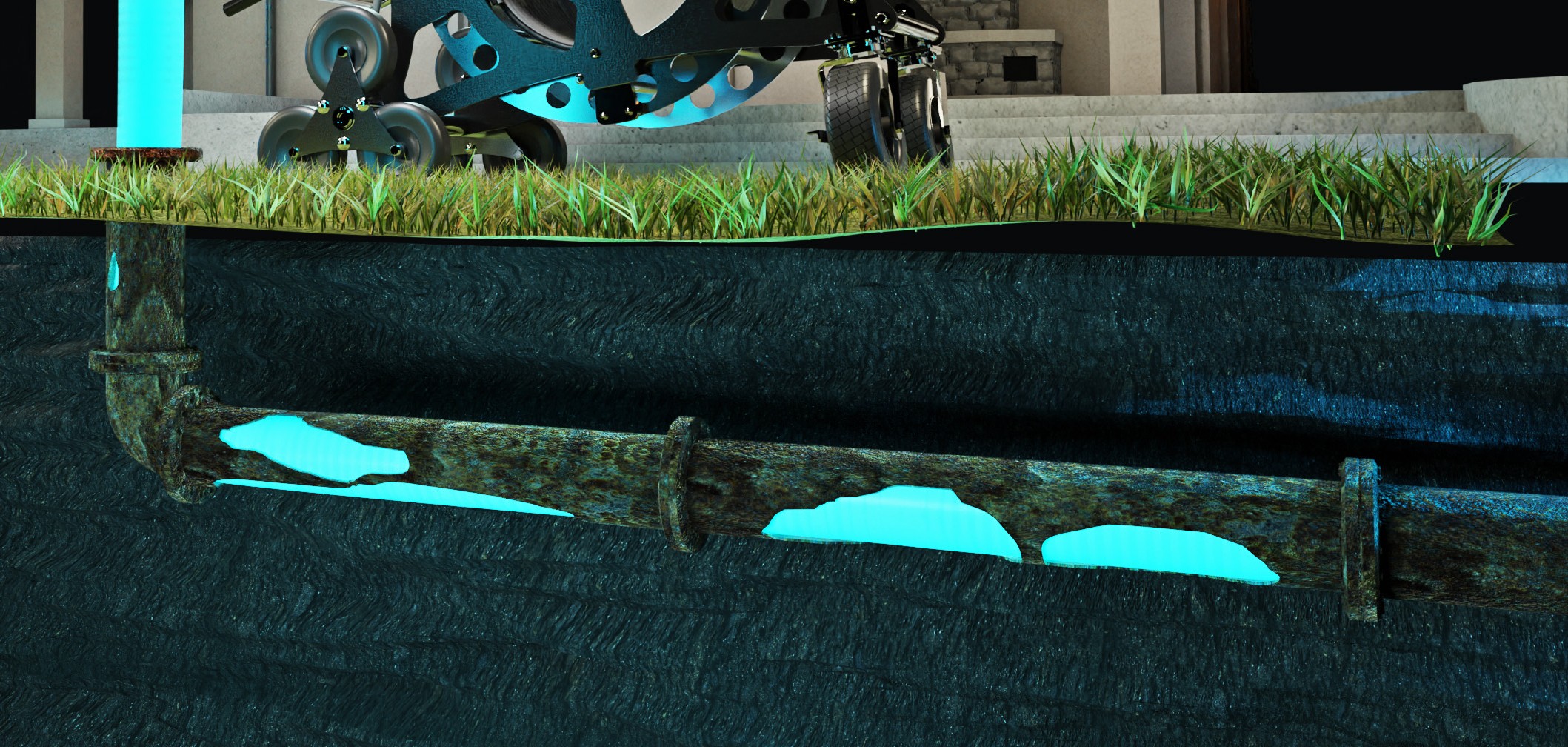
Freeze-thaw cycling accelerates the damage. Every winter, soil movement stresses joints, opens cracks, and increases the ovality of already deteriorated host pipes. By the time a rehabilitation project gets scoped, the host pipe has often drifted significantly from its original geometry. A 2mm cured-in-place pipe liner that might perform adequately in stable conditions has very little margin left when the host pipe is already deformed.
The Load Factors That Define Chicago Installations
When evaluating CIPP liner thickness for a Chicago or Chicagoland project, the structural loading environment includes:
- Chicago blue clay soil pressure across most of the metro area, particularly in older city neighborhoods
- Severe freeze-thaw cycling that drives ongoing host pipe deformation and joint separation
- Heavy freight and truck traffic loads on city arterials, expressway service roads, and suburban commercial corridors
- Deep burial depths required by Chicago’s flat topography and drainage infrastructure design
- Aging clay tile and concrete host pipes throughout the city grid, many past their expected service life
- Groundwater influence from proximity to Lake Michigan and the Chicago River system
- MWRD and City of Chicago specifications that reflect the region’s demanding underground conditions
A 2mm CIPP liner may satisfy minimum ASTM F1216 thresholds in controlled conditions. Chicago’s underground infrastructure does not offer controlled conditions.
The Business Case for Getting Liner Thickness Right
The Metropolitan Water Reclamation District of Greater Chicago manages one of the largest water reclamation systems in the world, and federal IIJA funding is actively flowing into rehabilitation projects across the region. For contractors, that means more work on the table. It also means more scrutiny on installation quality and long-term performance.
A liner that underperforms on a MWRD-adjacent project or a Cook County municipal job does not just trigger a callback. It affects your standing for future bid consideration. In a metro market where public-sector infrastructure work is a significant revenue stream, pipe lining warranty risk is a business risk.
Why 3mm Is the Standard for Chicago Work
A 3mm CIPP liner provides the structural margin that Chicago’s load environment demands. The advantages are specific to this market:
- Greater resistance to the sustained clay soil pressure common across the metro area
- Improved sewer liner structural capacity in deteriorated clay tile and concrete host pipes
- More installation forgiveness when freeze-thaw damage has pushed host pipes beyond design geometry
- Enhanced pipe liner durability through annual freeze-thaw cycling and sustained load variation
- Stronger long-term performance in deep burial applications throughout the city grid
- Defensible specifications for MWRD reviews, municipal engineering sign-off, and third-party post-installation inspection
For engineers writing specs on rehabilitation projects in this market, 3mm is the recommendation that holds up under review.
The Question That Settles the Decision
ASTM F1216 liner calculations account for soil type, burial depth, groundwater, live loads, and host pipe condition. Chicago blue clay compresses and moves differently from the soil profiles that standard design tables were built around, and freeze-thaw damage to host pipes can push ovality well beyond what pre-job assessments capture. Running those calculations site by site isn’t procedural overhead. It is the only reliable way to know whether a 2mm liner will hold up in this specific underground environment, on this specific job.
Before specifying a 2mm liner on any Chicago-area project, one question needs a clear answer: Have the ASTM F1216 calculations been completed for this specific installation?
If the answer is no, the path forward is straightforward. Install 3mm.
Build for What Chicago Throws at It
Every winter in Chicago tests underground infrastructure. Every spring reveals what held and what didn’t. Contractors and engineers who specify 3mm CIPP liners are building for the real conditions, not the ideal ones.
The margin matters here. Install 3mm.